Sometimes a kitchen pantry looks entirely organized, yet still fails to function smoothly during busy meal prep.
You can have uniform bins, neat labels, and perfectly spaced shelves, and still open a brand-new box of spaghetti while a half-full box sits pushed toward the back of the cabinet. You open a second bag of rolled oats because you couldn't spot the one you started last Tuesday, only to find three open packages of crackers later in the month.
The problem in these situations is rarely a lack of cabinet storage or having the wrong containers. The issue is that standard pantry organization systems treat all items equally—storing unopened backup stock side-by-side with foods you have already started using.
The solution is not buying another complete set of pantry organizers. The solution is creating a simple, visible pantry Use-First Zone. By anchoring your pantry habits to the fundamental principle: organize your pantry around what needs to be used first—not just where it fits, you establish a lightweight See → Use → Restock → Reset cycle that keeps everyday foods visible and meal planning effortless.
Why Opened Pantry Foods Are Easy to Forget
In most households, pantry clutter does not happen because people are careless. It happens because of how our brains visually process shelves.
When opened and unopened foods share the exact same storage basket or shelf row, several behavioral friction points emerge:
- Visual Occlusion: Taller, pristine boxes placed in front naturally hide smaller, rolled-down bags behind them.
- Lack of Priority Hierarchy: When five bags of pasta sit together in one container, your eye cannot immediately tell which package has already been breached.
- Scanning Fatigue: When cooking dinner quickly after a long day, you grab the first recognizable package in front rather than digging through the back row.
- Accidental Stockpiling: You assume you're out of a key ingredient because you don't see it immediately, leading to unnecessary repeat purchases.
Understanding that this is a visibility problem rather than a storage volume problem is key to designing an intuitive kitchen system.
What Is a Pantry Use-First Zone?
A Use-First Zone is a small, designated, highly visible area on your most accessible pantry shelf reserved strictly for foods that have already been opened or need attention before new packages are breached.
A functional Use-First Zone possesses five distinct qualities:
- Intentionally Small: It holds only a handful of items at any given moment.
- Front-and-Center: It sits directly at eye level or in your primary line of sight.
- Temporary by Design: Foods enter the zone, get consumed, and leave. It is a transit station, not permanent storage.
- Frictionless Access: It requires zero lid-opening or bin-unstacking to see what is inside.
- Quick to Reset: It takes less than 30 seconds to maintain each week.
"One small zone. Not a second pantry."
What Belongs in a Use-First Zone?
To keep the zone useful, only place items that genuinely benefit from elevated visibility. Everyday examples include:
- Opened Dry Grains & Starches: That half-box of penne, partially used bag of jasmine rice, or open quinoa pouch.
- Active Breakfast Items: An opened box of cereal, granola, or rolled oats currently in rotation.
- Snack Bags & Crackers: Opened pretzel bags or cracker boxes that have been neatly sealed with a bag clip.
- Partially Used Baking Staples: A half-used bag of chocolate chips, shredded coconut, or specialty nuts from a recent recipe.
- Single-Serving Backups: The last two granola bars or tea bags from an otherwise empty carton.
Note: Always store foods in appropriate food-safe packaging, adhere to printed package dates, and use your own judgment regarding food quality and storage guidelines.
What Does NOT Belong There?
The quickest way to destroy a Use-First Zone is to let it expand into a general dumping basket. A strict boundary is essential.
Keep these categories completely out of the zone:
- Unopened Bulk Inventory: Unopened cans, sealed boxes, and multi-pack backups belong in secondary storage or on deeper pantry shelves.
- Long-Term Staples: Spices, cooking oils, and flour bins have dedicated category homes and do not belong in a temporary priority tray.
- Non-Food Clutter: Cleaning cloths, spare napkins, or coupon clippings must never enter the food priority tray.
- Items Without a Home: If an item doesn't have a defined category, give it a real home rather than parking it in the Use-First area.
If every item in the pantry is treated as "use first," then no item has true priority.
Where Should the Use-First Zone Go?
The placement of your priority zone should follow the natural physical pathways of how you cook and prepare meals.
Ideal locations include:
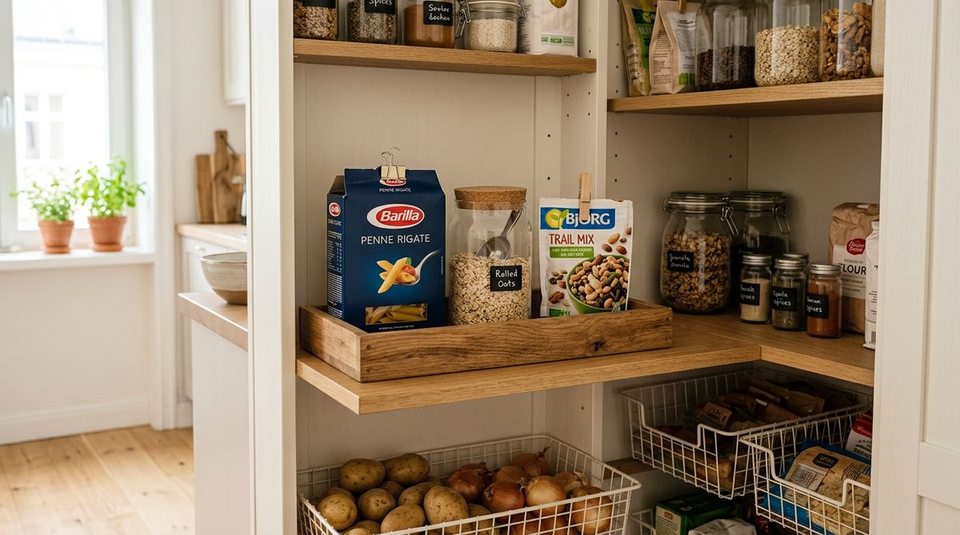
- The Center of the Eye-Level Shelf: Placing a shallow wooden or woven tray right in the middle of your main eye-level shelf ensures you see it the second you open the cabinet door. For guidelines on shelf zoning and depth, our guide to 5 pantry depth and visibility rules for small kitchens outlines how to prevent blind spots.
- The Front Corner of the Primary Food Shelf: If you have narrow shelves, reserving the front 8 inches on the right or left side creates an effortless grab-and-go station.
- A Shallow Stackable Front-Access Bin: In deeper pantry cabinets, a transparent front-opening container prevents items from sliding into dark back corners.
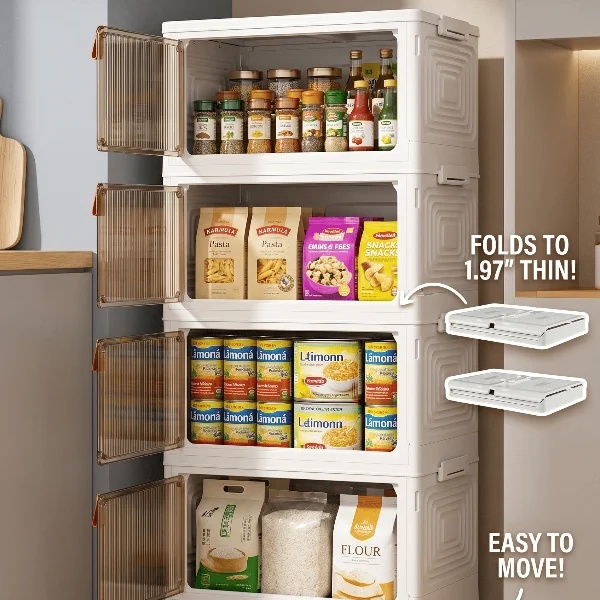
Stackable Collapsible Pantry Storage Bins with Front Doors
Solution: These clear stackable bins feature magnetic front-opening doors, allowing you to access everyday opened staples effortlessly without unstacking containers or reaching blindly into deep shelves.
- Front-opening doors provide direct access to opened items
- Clear transparent panels keep priority foods 100% visible
- Stackable and collapsible to fit diverse apartment cabinet heights
For more space-conscious ideas to streamline your pantry cabinets, explore our curated pantry organization guides.
How to Create One Without Buying Anything
You do not need to buy specialized organizing containers to start a Use-First system. You can establish one today in under five minutes using items you already own:
- Repurpose a Shallow Tray: Use an existing shallow baking dish, small wooden serving tray, or clean shoebox lid.
- Clear an Eye-Level Landing Zone: Move unopened jars back 6 inches to create a dedicated 10-inch open rectangle at the front of your shelf.
- Gather 3 to 4 Opened Staples: Find the partially used pasta, rice, or cereal currently scattered across your shelves and place them into the designated tray.
- Test for Three Days: Notice how having these items front-and-center changes your meal-prep choices before considering any new storage purchases.
Testing the workflow with zero-cost tools ensures the habit sticks before you spend money on aesthetics.
The See → Use → Restock → Reset System
To keep food moving smoothly through your kitchen, anchor your daily cooking routine to this 4-step framework:
SEE → USE → RESTOCK → RESET
- SEE: Position foods that need attention directly in your natural line of sight so they are impossible to overlook.
- USE: When deciding what to cook for dinner or pack for lunch, check the Use-First Zone before opening a fresh package.
- RESTOCK: When a staple is completely finished, restock your backup inventory only when necessary.
- RESET: As new packages are opened during cooking, immediately place them into the Use-First Zone to keep the cycle continuous.
This closed loop transforms pantry maintenance from a dreaded monthly chore into an automatic, 10-second daily rhythm.
The 10-Second Pantry Check
Before pulling out the scissors or pulling open a fresh box of food, practice this 10-second mental habit:
Ask yourself: "Do I already have an opened version of this ingredient?"
Then run through this rapid checklist:
✓ Glance at the Use-First tray.
✓ Select the opened item to finish first when appropriate.
✓ Return the remainder directly to the tray.
✓ Move the next newly opened item forward.
How to Keep the Use-First Zone From Becoming Clutter
Like any organizing tool, a priority zone will fail if it is allowed to become overfilled. Maintain strict boundaries using these five rules:
- Rule 1: Keep It Compact: The zone should never occupy more than 15–20% of your total eye-level shelf space.
- Rule 2: Strict Admission: Only items with breached packaging or short-term priority enter.
- Rule 3: One-In, One-Out: If the tray is full, do not stack items on top; consume an existing item before adding another.
- Rule 4: Empty Containers Exit Immediately: Never leave empty boxes or crumpled bags in the tray.
- Rule 5: Reassess Weekly: If an item sits in the zone for two weeks without being touched, return it to its permanent category home.
How This Fits Into a Normal Pantry
It is important to emphasize that a Use-First Zone does not replace your overall pantry organization system. Instead, it acts as a lightweight front-end buffer for it.
Your overarching pantry structure should still maintain clear, logical categories:
- Baking ingredients grouped together on upper shelves
- Canned goods and sauces arranged together
- Bulk backups stored neatly in lower drawers or bins
When an item from a background category is opened, it temporarily shifts into the Use-First Zone until it is finished. The rest of your pantry stays perfectly categorized and orderly.
A Simple Weekly Use-First Reset
During your weekly grocery unpacking or kitchen tidy-up, perform a quick 60-second reset:
- Scan the Tray: Remove any empty packages or clips.
- Wipe the Base: Brush away any stray crumbs to keep the surface pristine.
- Rotate In Newly Opened Items: If you opened a new bag of grains over the weekend, move it into the tray.
- Clear Out Space-Wasters: If an ingredient was only needed for a single recipe and won't be used soon, return it to secondary storage. For more decluttering ideas, our guide on 7 things taking up space in your pantry right now highlights items that crowd shelves.
When a Use-First Zone Is Not the Right Solution
A priority zone is a specialized tool, not a mandatory rule for every home. A Use-First Zone may be unnecessary if:
- Your pantry is very small (e.g., two narrow cabinet shelves) where every single item is already 100% visible at a glance.
- You cook in large batches and consume entire packages in a single meal, leaving virtually no partial bags.
- You already utilize a similar system in your fridge. (For coordinating fresh groceries, see our guide on how to organize a small refrigerator so you can see everything).
Make Your Pantry Work Around What You Use
Creating a functional, calm pantry does not require buying dozens of uniform containers or reorganizing every shelf from scratch. A calm kitchen comes from setting up intuitive systems that match how you actually cook.
By carving out a small, visible Use-First Zone and following the See → Use → Restock → Reset rhythm, you give opened foods a clear landing spot. You eliminate the frustration of hunting for half-used bags, streamline your daily cooking, and create a pantry that stays effortlessly organized every single day.