When you live in a small apartment, floor space is a luxury. If your entryway is just a blank wall and a narrow hallway, you might think you have no room for organization. But the solution is right in front of you: use your walls.
Vertical storage is the ultimate hack for tiny entryways. By moving essential items off the floor and onto the wall, you create a system that is both functional and visually open. Here is the complete guide to maximizing your entryway wall space without making it feel cluttered.
Why Wall Storage Helps Small Entryways
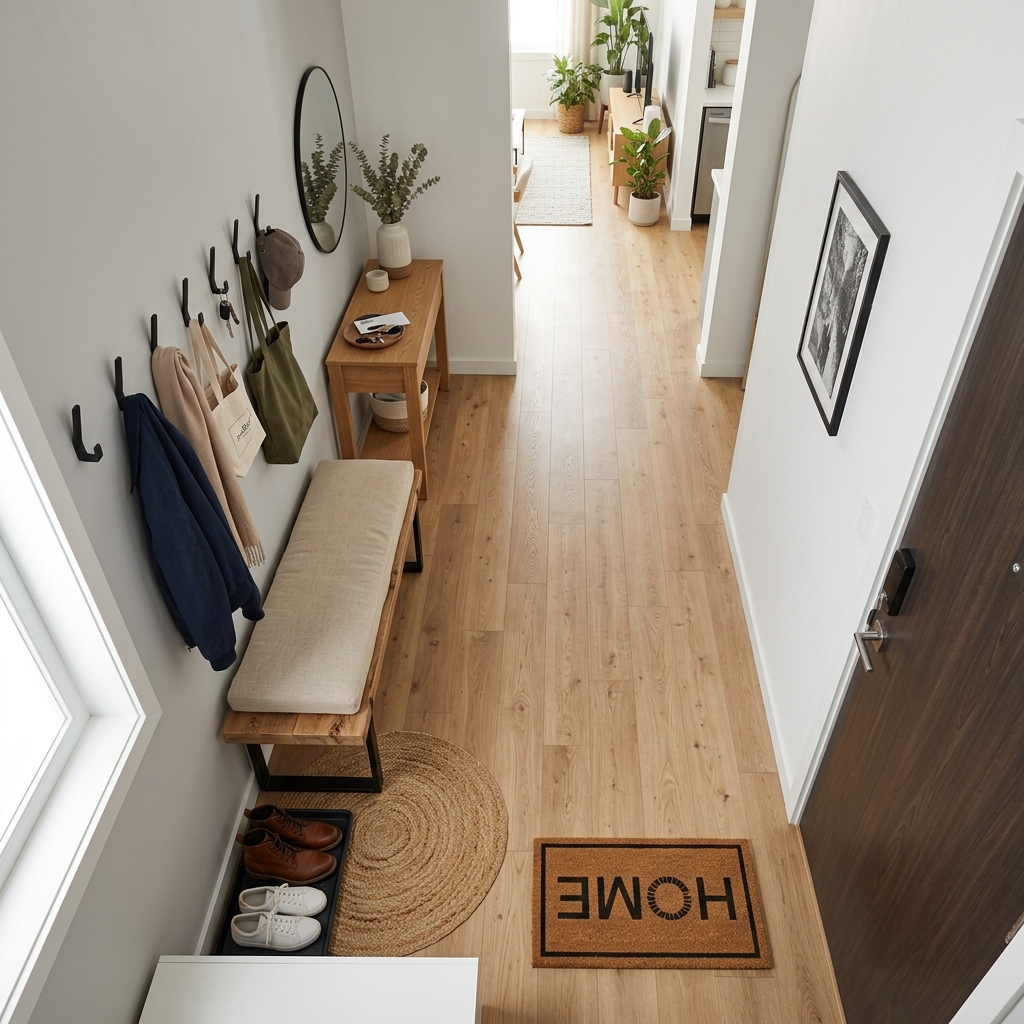
Small entryways suffer most when floor space is compromised. A bulky console table or a wide shoe rack can immediately make a narrow hallway feel like an obstacle course. Wall storage changes the geometry of the room. By utilizing the vertical plane, you draw the eye upward, freeing up the physical floor path. This makes the entryway feel larger, brighter, and significantly easier to navigate when you're carrying groceries or rushing out the door.
Decide What Deserves Wall Space
Not everything belongs on the entryway wall. A common mistake is using wall hooks as long-term storage for off-season coats or rarely used bags. The entryway wall should be strictly reserved for high-frequency items: the coat you are currently wearing, the keys you use daily, the dog leash, and the shoes in current rotation. Everything else should be relocated to a bedroom closet. Being ruthless about what deserves wall space is the first step to a functional system.
Match Storage to Everyday Entryway Tasks
Effective wall storage isn't just about hanging things up; it's about supporting your actual daily routines. Identify your core entryway tasks: dropping off mail, taking off shoes, hanging a coat, and putting down keys. Your wall storage should offer a specific, dedicated spot for each of these actions. If you always drop your mail on the kitchen counter, you don't just need a hook—you need a wall-mounted mail sorter right by the door.
Keep Wall Storage Easy to Reach
The best storage system is one you don't have to think about. If a shelf is too high, you won't use it. If a shoe cabinet is difficult to open, you'll leave your shoes on the floor. Install floating shelves at waist or chest height to act as a natural drop zone. Keep hooks at a comfortable reaching height for everyone in the household. Accessibility is what turns a good idea into a lasting habit.
Avoid Turning the Wall Into Visual Clutter
The danger of wall storage is that it puts all your belongings on display. A wall covered in random coats, bags, and scarves can quickly look chaotic. To prevent visual clutter, introduce closed storage where possible, such as a tilt-out shoe cabinet that hides footwear completely. For open storage like hooks or shelves, enforce a strict capacity limit. Leave negative space between items, and use uniform storage baskets to conceal smaller loose items like gloves or sunglasses.
Plan Around the Entryway Traffic Path
In a narrow apartment hallway, the physical depth of your wall storage matters immensely. You need to maintain a clear walking path. Avoid deep shelves or bulky coat trees that protrude into the walkway. Instead, opt for slim-profile organizers. A shoe cabinet that is only 6 inches deep or a coat rack with fold-down hooks ensures you have storage without constantly bumping your shoulders as you walk by.
Renter-Friendly Wall Storage Considerations
Renters often hesitate to use wall storage because they fear losing their security deposit over drill holes. Fortunately, you don't always need heavy anchors. For lightweight items like keys and mail, heavy-duty adhesive strips or command hooks work perfectly. If you do need to drill for a coat rack or shelf, remember that a few small screw holes are easily patched with spackle and a dab of paint when you move out. Don't let the fear of a minor repair stop you from creating a functional home.
Build a Simple Wall Storage System
Creating your system is about combining the right components. Here are the core elements that solve the most common entryway problems:
Floating Shelves for Decor and Drop Zones
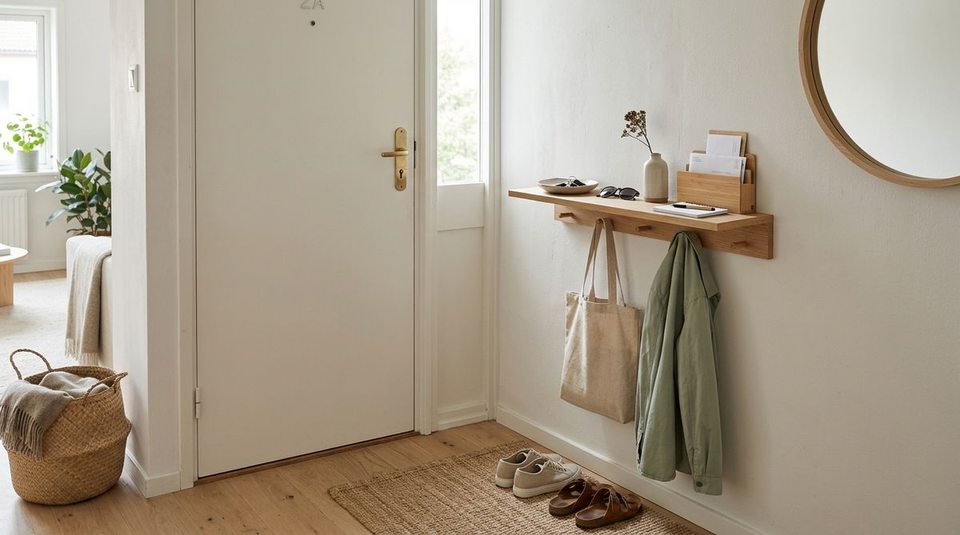
A bulky console table can block a narrow hallway. Instead, mount a sleek floating shelf at waist height to act as your landing zone for a catch-all tray.
Wall-Mounted Coat Racks
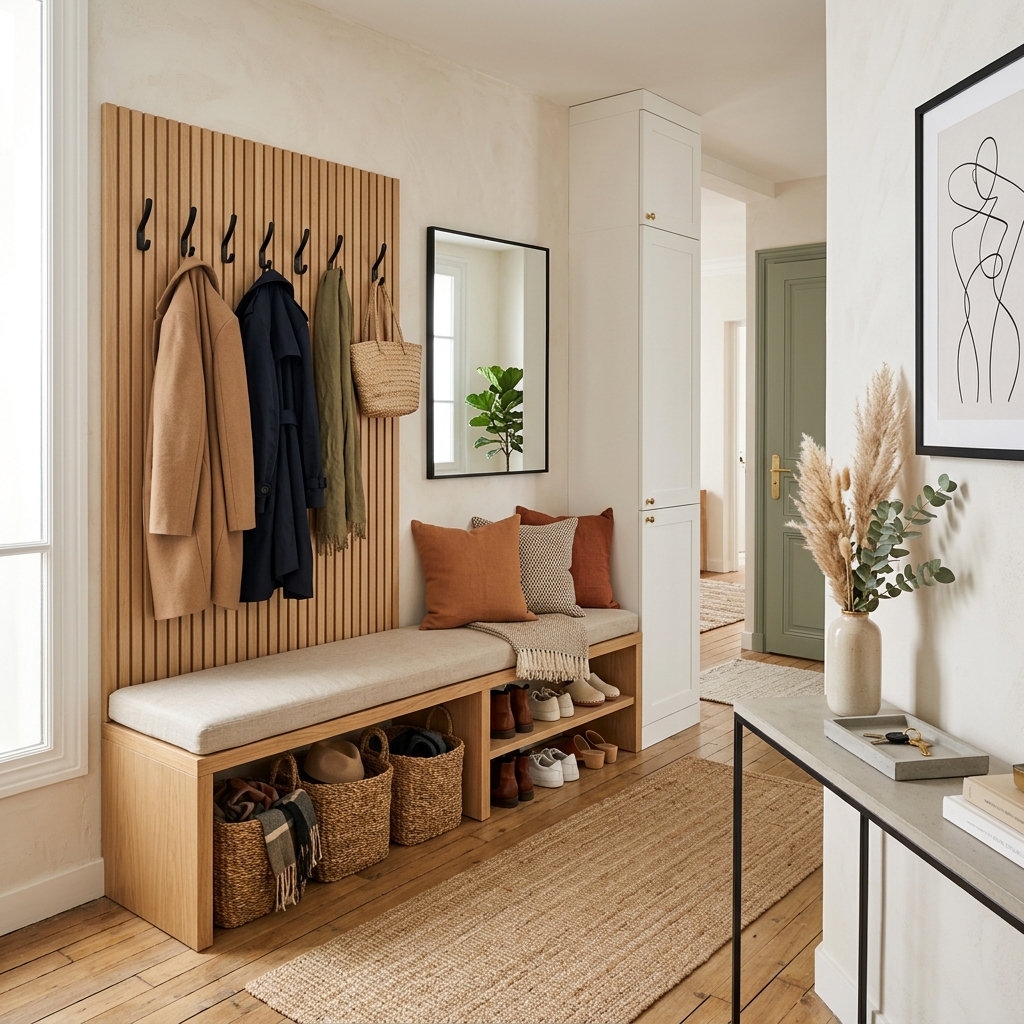
Freestanding coat trees take up too much room and often tip over. Install a heavy-duty wall-mounted coat rack with an integrated top shelf.
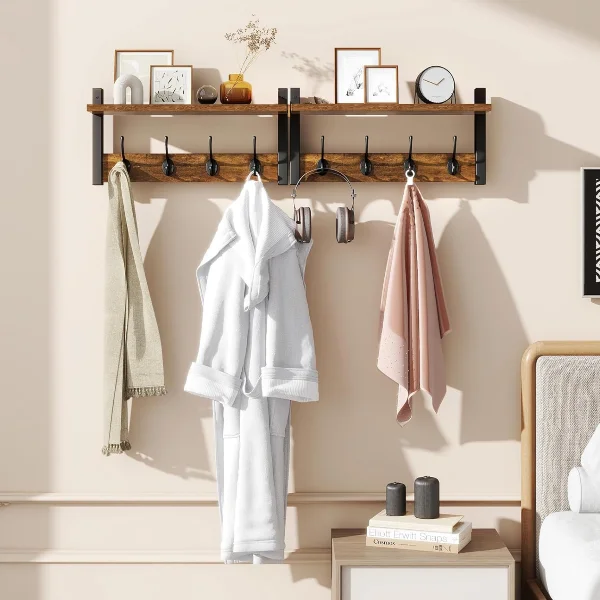
Wall-Mounted Coat Rack with Shelf
Problem: Bulky freestanding coat racks taking up an entire corner.
Solution: A wall-mounted rack with strong hooks for heavy coats and a top shelf for decor or hats.
- Set of two rustic brown floating shelves
- Features 8 high-strength iron hooks
- Top shelf for photo frames or small plants
Vertical Shoe Storage
Shoes don't have to live in a messy pile on the floor. Wall-mounted shoe cabinets or slim vertical racks hug the wall tightly.
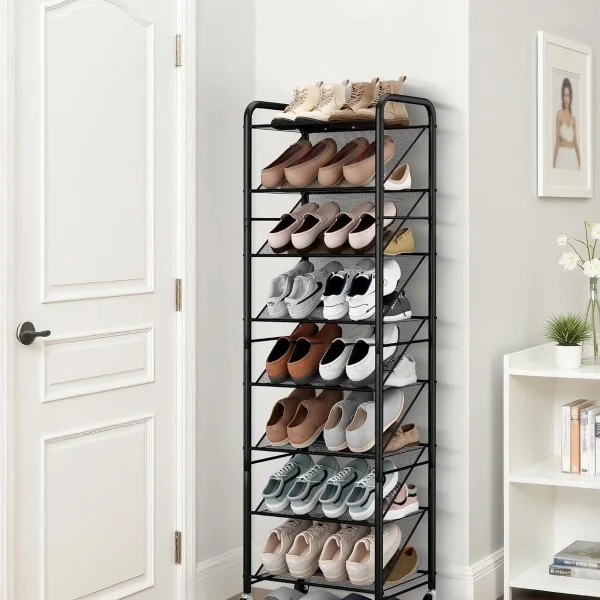
Slim shoe rack for entryway
Problem: Scattered shoes taking up the entire entryway floor.
Solution: This 8-tier metal rack holds up to 30 pairs of shoes without eating up precious square footage.
- 8-tier vertical design with lockable wheels
- Holds up to 30 pairs of shoes
- Double-sided vinyl mesh shelves
The Command Center
Combine multiple functions into one vertical space with a wall-mounted command center for mail and keys.
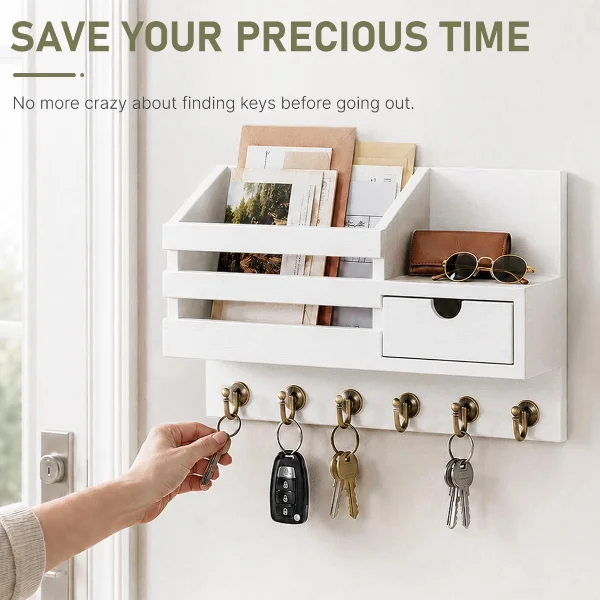
Decorative Key Holder & Mail Organizer
Problem: Keys and mail end up scattered all over the house.
Solution: This stylish wall organizer catches mail immediately and provides dedicated hooks for every set of keys.
- Features 6 sturdy hooks and a compact drawer
- Crafted from high-quality Paulownia wood
- Supports up to 100 lbs
Strategic Mirrors
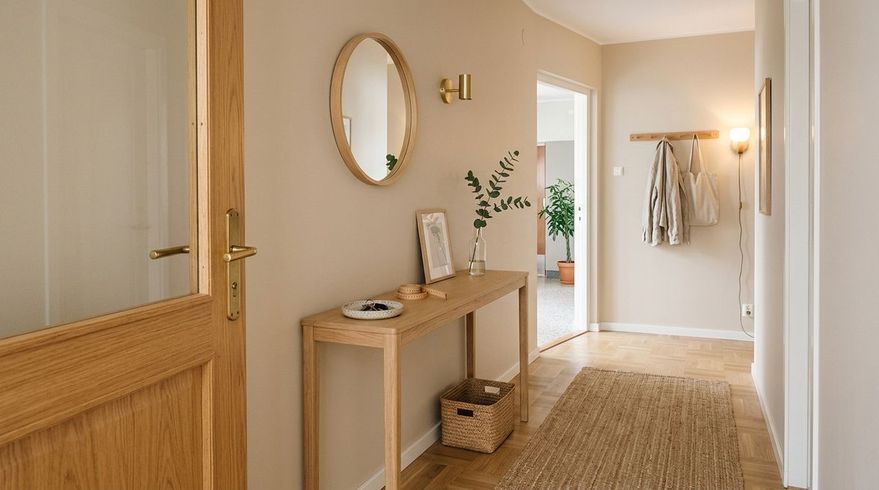
A large wall-mounted mirror reflects light, making a cramped entryway feel twice as big while giving you a place for a quick outfit check.
How to Maintain the Setup
A wall storage system only works if it stays uncluttered. Establish a weekly habit of reviewing what is hanging on your wall. If you haven't worn a coat in a week, move it to the main closet. If mail is piling up in the sorter, recycle the junk and file the important documents. Treat the entryway wall as a temporary staging area for active items, not a permanent archive.
A Quick Entryway Wall Storage Reset
When the wall starts feeling overwhelming, perform a 5-minute reset: remove everything from the hooks and shelves, wipe down the surfaces, and only put back the items you used today or plan to use tomorrow. By shifting your focus from the floor to a well-managed wall, you can create a highly functional, welcoming entryway in even the smallest of apartments.