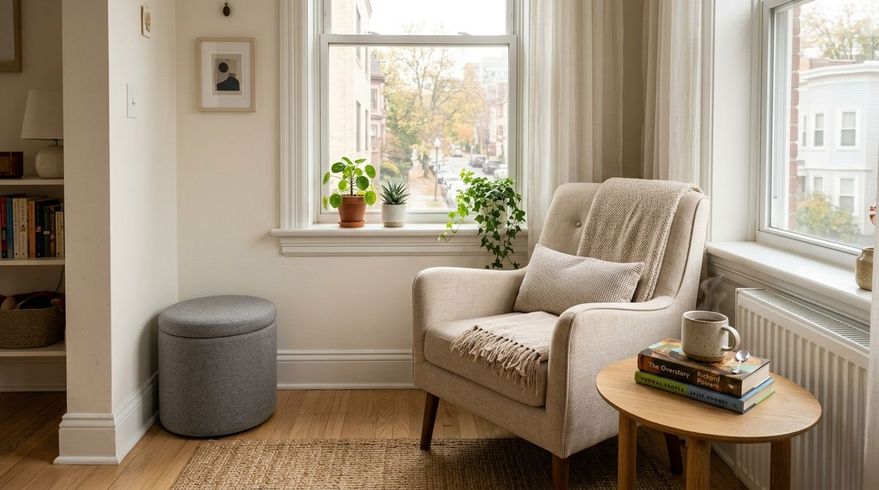
Almost every renter dreams of having a dedicated reading corner: a comfortable chair, gentle morning light, a warm cup of tea, and a quiet spot to unwind with a favorite book.
Yet in a studio or one-bedroom apartment, that desire often hits an immediate roadblock: "I simply don't have enough square footage for a single-purpose seating area." When floor space is at a premium, allocating precious square feet to a chair that only serves one leisure activity can feel like an impractical luxury.
The mistake is assuming that every functional zone in a small home must serve only one singular purpose. In thoughtful small-space design, you don't need separate rooms for relaxing and storing essentials. You just need to challenge single-use furniture.
The solution is establishing a One Zone → Two Jobs system. By prioritizing comfort first and giving the space one practical secondary storage job, you can create a tranquil, magazine-worthy reading nook that solves a real everyday storage bottleneck without ever feeling overloaded or cluttered.
What Makes a Reading Nook Work in a Small Apartment?
A reading nook in a compact home succeeds because of balance, not excessive square footage. For a small reading area to be genuinely useful day after day, it must possess five core qualities:
- Genuine Physical Comfort: If the chair isn't genuinely inviting to sit in for thirty minutes, the nook becomes an unused monument that collects laundry.
- Visual Calm: The area must maintain a restful, uncluttered aesthetic with neutral tones and clean lines so it feels like a retreat rather than a utility station.
- Appropriate Proportions: Furniture scale must match apartment dimensions—light leg frames, low-profile silhouettes, and modest footprints.
- Frictionless Access: You should be able to sit down, grab a book, and rest a beverage without shifting items out of the way.
- Natural Location: It should exist where daylight or a quiet architectural boundary naturally invites pause.
Start With the Function, Not the Furniture
Before browsing home decor catalogs or measuring armchairs, define the experiential purpose of the nook.
Ask yourself: "What specific activities will take place in this footprint?"
- Sipping coffee while reading the morning news
- Quiet evening journaling or reading fiction
- Weekend digital unplugging or listening to audiobooks
Once the comfort function is clear, identify exactly ONE storage problem you want this footprint to solve. For instance, giving your current 4–5 reading books a tidy landing spot, or providing hidden storage for bulky living room throw blankets. Defining these two roles upfront prevents feature creep.
Choose the Right Spot
Finding the right micro-zone in an apartment is about identifying where resting naturally makes sense, rather than forcing furniture into awkward corners.
Strong potential locations include:
- Beside a Natural Light Source: Positioning a compact chair angled toward an apartment window provides pleasant daylight and a restful exterior focal point.
- The Bedroom Perimeter: A quiet corner opposite the bed creates a dedicated transition zone for evening relaxation away from living room screens.
- An Open Wall Section Beside the Sofa: Placing an accent chair slightly offset from the main seating group serves as both an intimate reading perch and extra guest seating during gatherings.
Focus on choosing an area where seating feels organic and inviting rather than congested.
Check the Space Before Adding Anything
Before adding or moving any furniture into your chosen spot, perform a comprehensive physical check of the immediate zone:
- Walkway Clearance: Ensure the chair edges do not pinch normal traffic corridors between rooms.
- Door & Window Swings: Verify that nearby closet doors, cabinet shutters, and window blinds can open completely without striking furniture.
- Outlet Proximity: Confirm you can safely plug in a small reading lamp or phone charger without stretching cords across walking paths.
- Radiator & Vent Buffer: Keep upholstered seating at a safe distance from apartment baseboard heaters or radiators.
Choose Seating That Fits the Apartment
In a small apartment, the visual weight of your seating is just as important as its physical dimensions. Bulky, overstuffed recliners consume visual breathing room and make rooms feel smaller.
Instead, look for seating styles tailored to compact footprints:
- Tapered-Leg Armchairs: Chairs with elevated wooden or metal legs allow light and floor space to flow underneath, making the entire room feel airier.
- Low-Back Accent Chairs: Keeping the backrest below window sill height preserves sightlines across the apartment.
- Compact Upholstered Benches: A shallow bench placed along a perimeter wall offers comfortable seating with a minimal forward footprint.
Give the Reading Nook ONE Storage Job
This is the core implementation of the multifunctional nook: assigning exactly ONE secondary storage task to the zone.
Here are four practical ways to integrate storage without crowding the experience:
Option A: Chair + Concealed Storage Ottoman
Pairing an accent chair with a compact, hollow storage ottoman provides a comfortable footrest while discreetly hiding extra throw blankets, pillows, or board games inside.
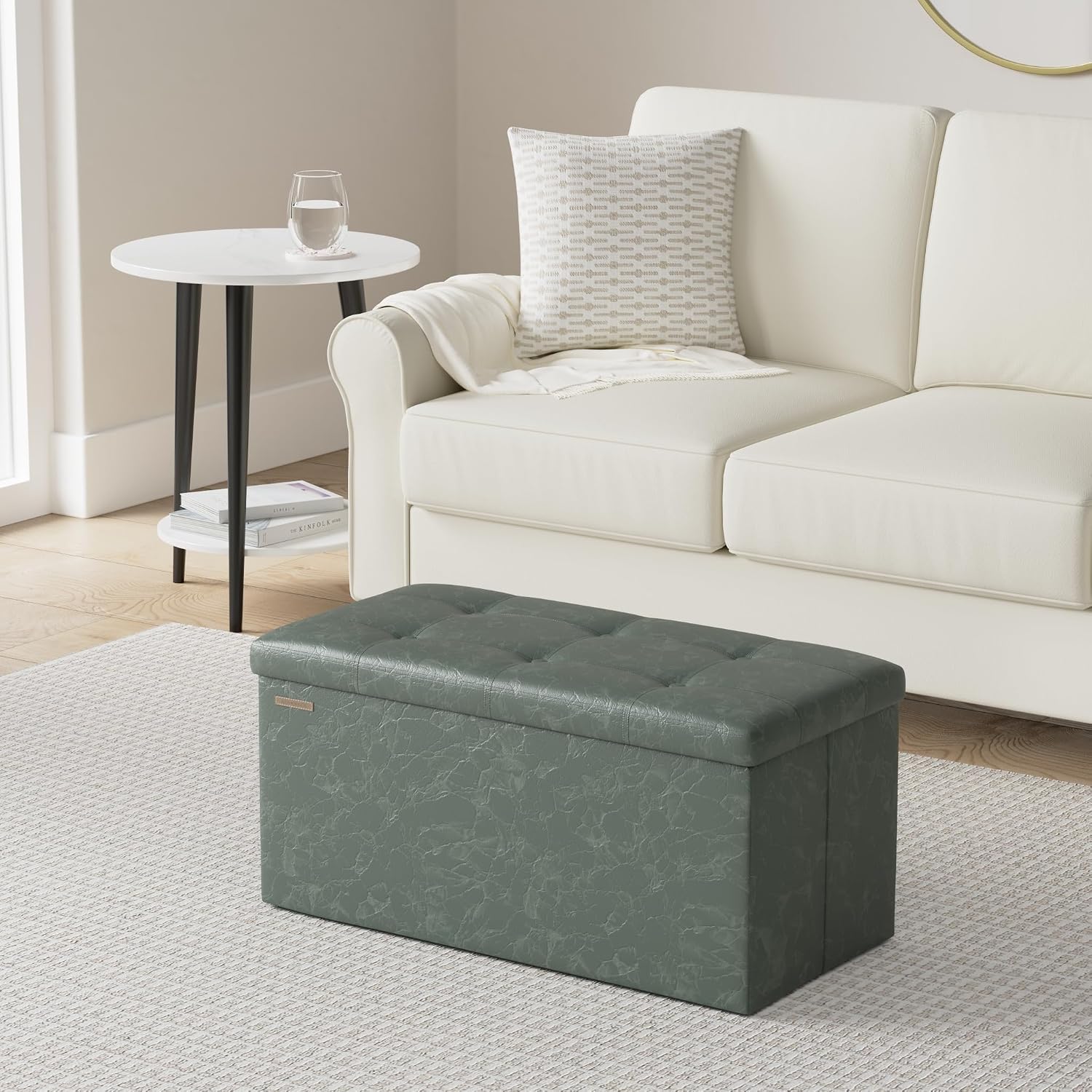
Folding Storage Ottoman Bench
Solution: This multi-purpose storage ottoman serves as a plush footrest or extra seat while offering spacious internal hidden storage for throws, magazines, and reading accessories. Folds flat when not in use.
- Dual-purpose design provides comfortable seating/footrest and hidden storage
- Conceals bulky blankets and reading accessories behind a clean upholstered lid
- Collapsible and lightweight for effortless renter mobility
Option B: Side Table with a Lower Shelf
A slender round pedestal table with a lower tier keeps your warm beverage on top while holding a modest stack of 3–4 current books underneath.
Option C: Floating Picture Ledge Book Display
Mounting a shallow, 3-inch-deep picture ledge on the adjacent wall displays the covers of current books vertically without occupying an inch of floor space.
For more smart strategies that reclaim unused vertical boundaries, explore our complete guide to how to find and use dead space in a small apartment.
Keep the Storage Secondary to the Comfort
The cardinal rule of multifunctional design is maintaining a strict visual and functional hierarchy:
COMFORT FIRST ↓ STORAGE SECOND
When someone looks at the corner, they should immediately think: "That looks like a cozy place to sit." They should not see a storage locker with a cushion balanced on top.
Warning signs that storage has begun overwhelming the nook:
- You have to move boxes or baskets off the seat before you can sit down.
- The table is too crowded with objects to set down a coffee mug.
- Bins or stacks of magazines creep into the foot space.
- Items unrelated to reading or relaxing start accumulating on the floor.
The Two-Job Rule
To keep your reading nook balanced over time, anchor the space to the Two-Job Rule:
"Job 1: Make the room more enjoyable.
Job 2: Solve ONE real storage problem.
If Job 2 ever interferes with Job 1 → Simplify."
If reaching for a stored item requires disassembling the chair, or if the storage clutter ruins your sense of calm, the second job has overstepped. Strip back the storage until the comfort returns.
What Should You Store in a Reading Nook?
To protect the peaceful atmosphere of your nook, store only items that genuinely belong to the relaxation experience:
- Active Reading Stack: 2 to 4 books you are currently reading or reference regularly.
- A Single Cozy Textile: One high-quality woven throw blanket draped neatly over the chair arm or folded inside the ottoman.
- Reading Accessories: Reading glasses, a bookmark, a small notebook, or a pencil tucked inside a discreet table drawer or small tray.
- A Compact Lumbar Pillow: Providing tailored back support during longer reading sessions.
Keeping the item count intentional creates an environment where relaxation is instantaneous.
What NOT to Store There
A reading nook will quickly degrade into an eyesore if you treat it as an overflow container. Establish a strict ban on these items:
- Entire Book Collections: Your whole 50-book library does not belong in the reading nook; store archive books on a dedicated bookshelf.
- Unopened Mail & Paperwork: Utility bills and documents create visual anxiety that completely breaks the reading mood.
- Tech Clutter: Tangled laptop chargers, gaming controllers, and bulky headphones.
- Random Household Overflow: Laundry baskets, fitness gear, or shopping bags waiting to be unpacked.
Maintaining clear category boundaries is one of the foundational 4 storage habits clutter-free renters swear by.
Keep Circulation Clear
An apartment storage solution is only successful if it maintains comfortable, unobstructed movement throughout the room. Even the prettiest reading nook becomes a daily frustration if you have to squeeze past it sideways.
Ensure that:
- There is an unobstructed walking path of at least 24–30 inches around the nook.
- You can easily stand up and step away from the chair without bumping into the side table or wall.
- Opening an ottoman lid or table drawer doesn't block room doorways.
Renter-Friendly Ways to Build the Nook
Rental living requires smart, damage-free setups that pack up easily when you move:
- Freestanding Furniture: Rely on movable armchairs, nesting side tables, and freestanding floor lamps rather than built-in window seats.
- Command Hook Cable Management: Guide reading lamp cords invisibly along baseboards using clear, removable adhesive clips.
- Portable Floor Coverings: A small 3x5 jute or wool accent rug visually defines the reading zone and protects rental hardwood floors from chair legs.
For more flexible ideas to optimize your apartment without risking your security deposit, explore our curated small apartment storage ideas.
Test the Nook Before Buying More
Before investing in a new accent chair or customized furniture, test the layout using pieces you already own:
- Reposition an Existing Chair: Move a dining chair, desk chair, or armchair to your intended nook spot.
- Add a Temporary Surface: Place a small stool or sturdy box beside it to act as a book rest.
- Live With It for 3 Days: Sit in the nook for 20 minutes each morning or evening. Notice the light, the walking clearance, and whether you naturally gravitate toward the space.
- Evaluate the Storage Job: Test whether having your current books or blanket stored right there actually feels convenient.
Testing first prevents costly furniture returns and ensures your space planning is grounded in real habits.
A Simple Reading Nook Reset
To keep your reading corner feeling like a peaceful sanctuary, perform this 30-second reset at the end of each week:
✓ Reshelve Finished Books: Return finished novels to your main bookshelf and bring forward the next one.
✓ Fold the Throw: Shake out and neatly fold your blanket over the chair back or place it inside the ottoman.
✓ Clear the Side Table: Wipe away any coffee rings and remove empty mugs or water glasses.
✓ Remove Stray Objects: Return misplaced phones, mail, or clothing to their proper rooms.
When a Multifunctional Reading Nook Is NOT the Right Choice
Honest design means recognizing when a specific layout does not suit your space. A multifunctional reading nook may not be the right choice if:
- Your living room is so compact that adding even a small accent chair makes walkway corridors uncomfortably narrow.
- You genuinely prefer reading on your sofa or in bed, meaning the nook would become decorative dead weight.
- The proposed storage need is so large (e.g., storing 20 winter coats) that it completely overpowers the seating area.
In those situations, simpler furniture upgrades like those in our review of 7 tiny apartment storage upgrades offer better alternatives.
Make One Small Zone Work Harder — Without Overloading It
Living in a small apartment doesn't mean giving up the simple joys of a cozy, dedicated relaxation corner. It simply means being intentional about how each square foot serves your lifestyle.
By applying the One Zone → Two Jobs framework—keeping comfort primary and letting storage play a quiet, secondary role—you transform an ordinary corner into an inviting retreat that keeps your home calm, functional, and beautifully organized.