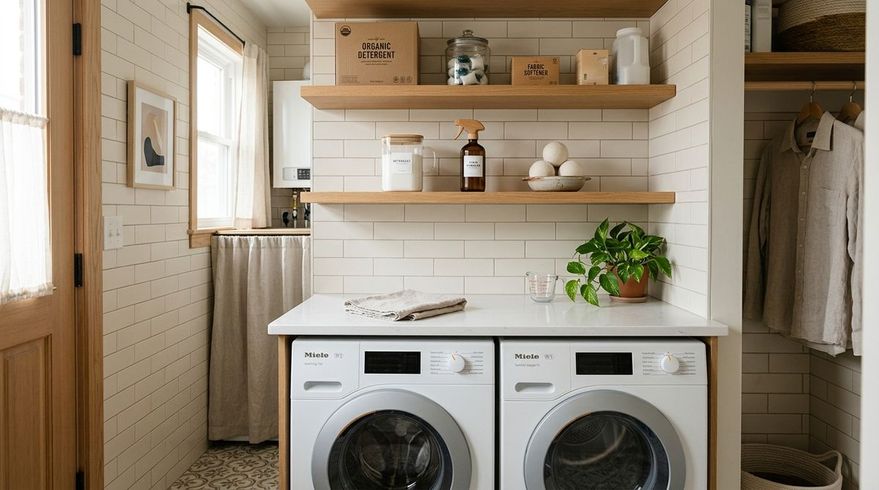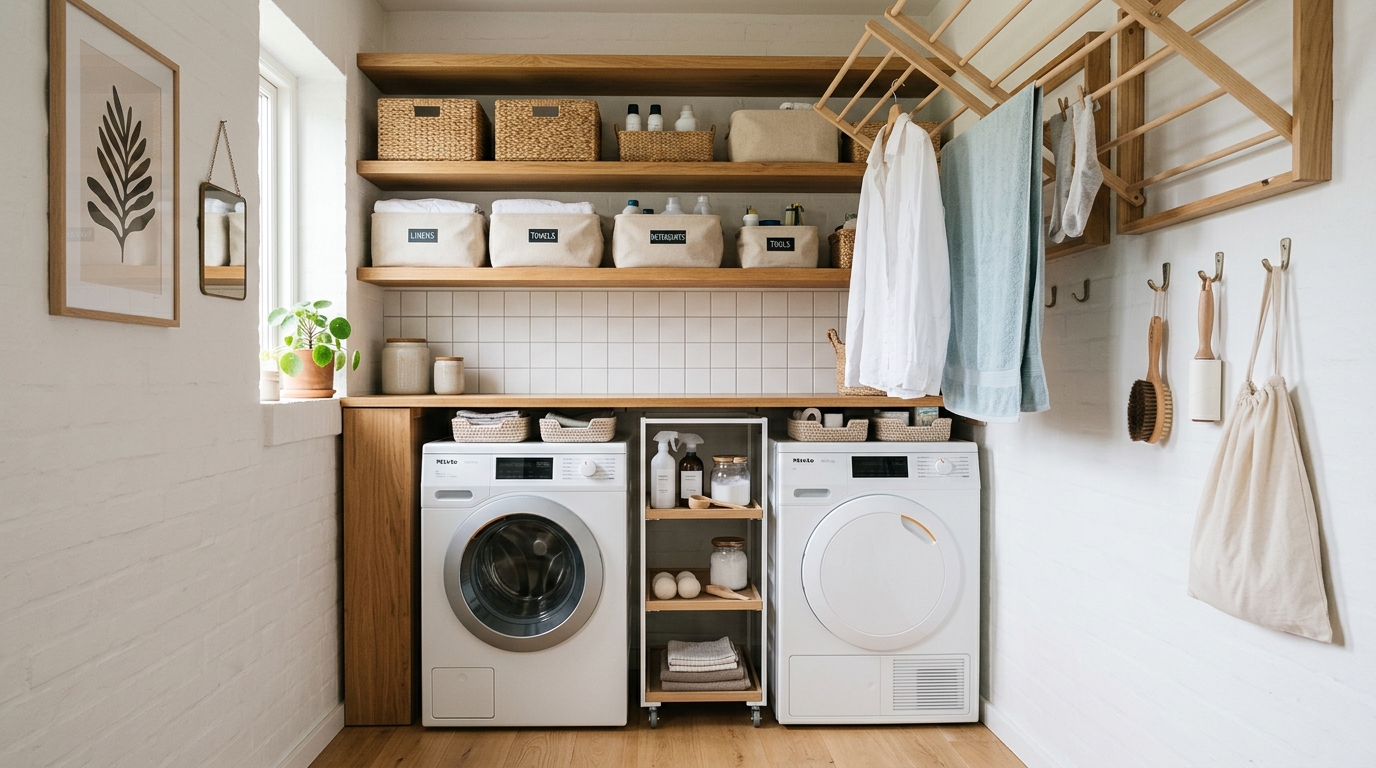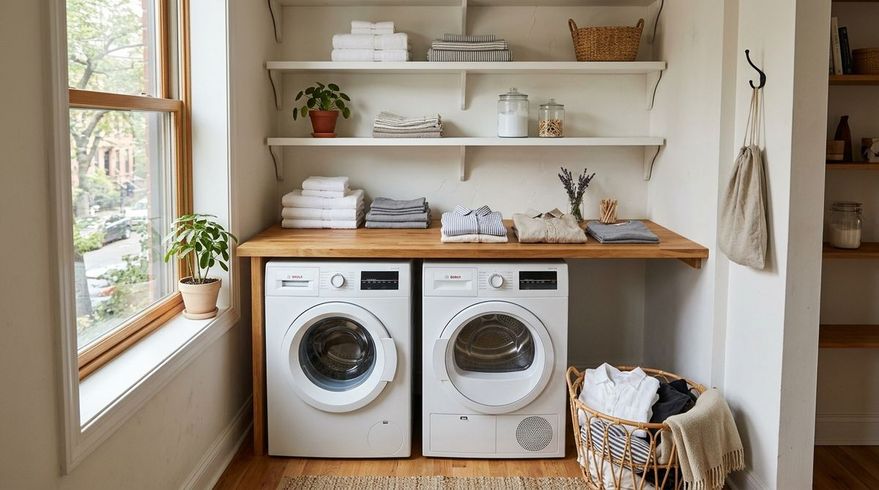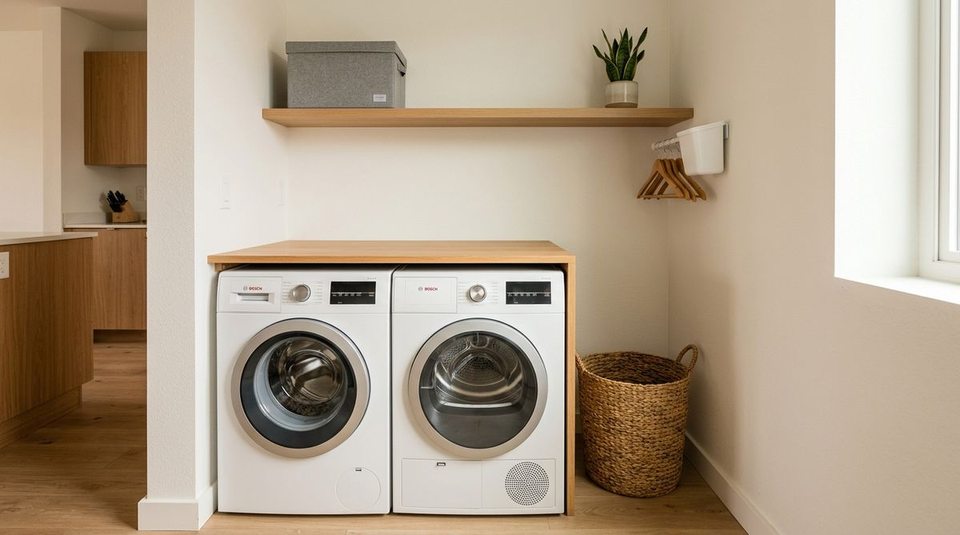
Most small laundry rooms do not become overwhelming because you own too many items. They become overwhelming because small leftover items stay behind after each load of laundry.
You finish folding a load of towels, pull a shirt from the dryer, and rush off to put clothes away. Left on top of the washer is an empty detergent measuring cup, a stray clothespin, an unfolded mesh wash bag, and an empty basket sitting directly in the middle of the floor.
None of these small items represent a major organization failure on their own. But when you return two days later with a heavy hamper of darks, you are immediately forced to clear three obstacles before you can even open the washing machine door. That initial barrier turns a routine household task into a frustrating chore.
The solution is not spending another Saturday reorganizing your cupboards or buying a new set of matching storage bins. The solution is adopting a lightweight, repeatable maintenance routine: The 5-Minute Laundry Room Reset. By following a simple 5-step cycle—NOTICE → RETURN → CLEAR → CHECK → STOP—you ensure your laundry room always remains in a usable starting state, completely ready for the next load.
Why Laundry Rooms Need a Reset, Not Another Organization Project
There is a fundamental difference between an organization system and operational maintenance. Organization establishes where things belong; maintenance ensures those things actually get returned so the space remains functional.
When laundry rooms become cluttered, many homeowners and renters make the mistake of treating every instance of mess as a sign that their entire storage setup has failed. They buy more baskets, install more hooks, or completely rearrange their shelves. Yet within a week, the clutter returns.
In reality, small laundry spaces suffer from accumulated friction:
- Compound Obstacles: One basket left on the floor blocks the lower dryer door; an item left on the folding counter prevents clean laundry from being set down.
- Starting Friction: Having to tidy up before starting a new load doubles the perceived effort of doing laundry.
- Project Fatigue: Attempting to deep-clean the room every time it looks messy leads to burnout, causing people to abandon maintenance entirely.
A quick reset prevents small friction points from snowballing into a full-blown weekend project. For foundational strategies on structuring your wash cycles, read our guide on the laundry workflow rule that makes laundry feel easier.
The 5-Minute Laundry Room Reset Framework
To keep maintenance fast and stress-free, the reset is built on five clear, linear actions:
"You don't need to restart your organization every time. You only need to return the room to a usable state."
Let's examine how each of the five steps works in real life.
Step 1 — NOTICE: What Did You Leave Behind?
The reset begins with a quick 5-second scan of the room immediately after your laundry session ends.
Look specifically for the 1 to 3 temporary leftovers that were used during the session but not put away:
- A mesh washing bag draped over the dryer door.
- A measuring cap or stain brush sitting on top of the machine.
- An empty hamper pushed out of its normal storage corner.
- A stray receipt, coin, or collar stay pulled from a pocket.
Do not scan the room looking for deep organization flaws. Simply notice what was actively handled during the load you just finished.
Step 2 — RETURN: Put One Thing Back
Once you notice the leftover items, take 60 seconds to return them directly to their existing homes.
The guiding rule here is absolute simplicity: return what already has a home.
- Place the measuring cap back on the bottle.
- Hang the mesh bag on its regular wall hook.
- Tuck the empty laundry basket back into its designated floor nook.
Do not invent a new storage location. Do not rearrange the cabinet to make it look better. Simply put the item back where it lives.
Step 3 — CLEAR: Restore the Working Area
A small laundry room depends entirely on having an open, accessible working surface and clear floor space.
During this step, ensure three critical areas are restored:
- The Folding / Loading Surface: The top of your washer/dryer or folding table should be completely bare and wipe-clean.
- The Equipment Clearance: Machine doors (both washer and dryer) must be able to swing fully open without hitting baskets or hampers.
- The Walkway / Floor: The floor path directly in front of the appliances must be unobstructed.
If you have dedicated counter space, see our step-by-step tutorial on how to organize a laundry folding area in a small space.
Step 4 — CHECK: Can the Next Load Start Immediately?
Before leaving the room, run this simple pass/fail decision test:
"Can I bring a heavy basket of clothes into this room right now and start a load without moving anything first?"
- If YES: Your reset is 100% complete.
- If NO: Remove only the single specific obstacle preventing immediate access, then stop.
This binary test prevents overthinking and keeps your focus laser-targeted on functional readiness.
Step 5 — STOP: Stop When the Room Is Ready
This is the most important step for long-term consistency: stop organizing as soon as the space is functional.
Human psychology often falls into the trap of momentum: you put away a basket, notice dust behind the machine, decide to clean the baseboards, and suddenly find yourself two hours into an exhausting deep clean. When that happens, your brain registers laundry as a draining chore.
A successful reset does not create a pristine magazine showroom. It creates a usable starting point. Protect your time and energy by walking away the second the room passes the readiness check.
The 5-Minute Laundry Room Reset Checklist
Save this practical 5-step checklist to keep your laundry nook functional after every wash day:
5-Minute Reset Routine
Complete these 5 quick checks after every laundry session:
- ✓ NOTICE: Identify 1–3 small leftover items left on machines or surfaces.
- ✓ RETURN: Put tools, measuring caps, and mesh bags back in their established homes.
- ✓ CLEAR: Restore the folding counter and clear the appliance doorway path.
- ✓ CHECK: Confirm the next load can start immediately with zero friction.
- ✓ STOP: Walk away as soon as the room is functional.
Pinterest Framework: NOTICE → RETURN → CLEAR → CHECK → STOP
What NOT to Do During a 5-Minute Reset
To prevent reset burnout, maintain clear boundaries around what you strictly avoid doing during your 5-minute routine:
- Do NOT reorganize detergents or cleaning bottles: If bottles are placed in their general cupboard, leave them alone.
- Do NOT sort through mismatched single socks: Keep a designated small lost-sock bin and deal with it once a quarter.
- Do NOT redesign shelf layouts: Changing hook positions or shelf heights is a project, not a routine reset.
- Do NOT browse storage shopping sites: Buying new bins will not solve daily habit friction.
- Do NOT attempt a full floor wash: A quick sweep of loose dryer lint is fine; scrubbing the tiles is a separate cleaning task.
If you notice an underlying storage shortage while doing your reset, note it for later and check our ideas on vertical storage in a small laundry room.
How to Make the Reset Easy to Repeat
Making any habit stick comes down to reducing friction. Follow these three rules to make your reset automatic:
- Attach It to the Final Machine Chime: Perform your reset the moment the last clean dryer load is removed and folded—do not leave the room until the 5-minute check is complete.
- Give Every Daily Tool a 1-Second Home: If returning your detergent cup requires moving four bottles or opening a latch, find a simpler zero-friction spot so putting it back takes 1 second.
- Keep Surface Objects Below Three: If your machine top or folding counter has more than three items permanently sitting on it, clear them into an upper cabinet so wiping the surface takes a single swipe.
The Reset Rule: Reset the Room, Not Your Entire Life
Whenever you feel overwhelmed by the state of your laundry space, repeat this simple mental anchor:
RESET THE ROOM,
NOT YOUR ENTIRE LIFE.
You do not have to solve every organizing dilemma in your home before starting a load of towels. You only need to fix the single obstacle that would make your next laundry session harder. Small, consistent resets protect your peace of mind.
When a 5-Minute Reset Is Not Enough
Honest home organization requires recognizing the limit of maintenance routines. A 5-minute reset maintains an existing system, but it cannot fix a broken one.
A separate, dedicated organization overhaul is appropriate when:
- Essential laundry items have no defined home anywhere in the room.
- Clean clothes must consistently be stacked on appliances because no folding or transition zone exists.
- Appliance doors cannot open because the room is physically overcrowded with non-laundry storage.
If your room suffers from structural overcrowding, browse our curated collection of laundry room organization ideas to design a functional baseline before relying on the reset.
Ready for the Next Load
A calm, functional laundry room is not about perfection—it is about readiness. By spending just five minutes returning tools, clearing working paths, and verifying appliance access, you eliminate the dread of starting laundry day.
Embrace the NOTICE → RETURN → CLEAR → CHECK → STOP rhythm, keep your reset short, and enjoy the effortless ease of a laundry room that is always ready when you are.