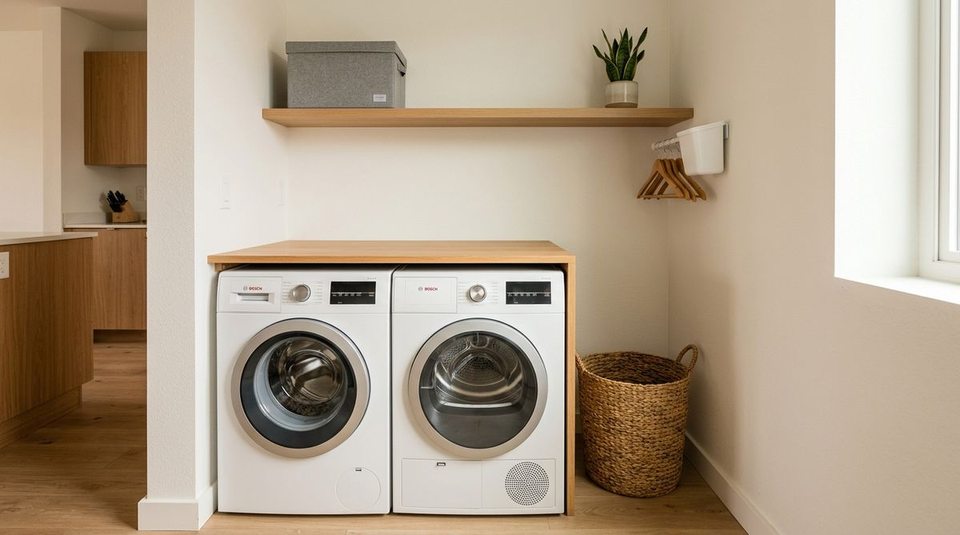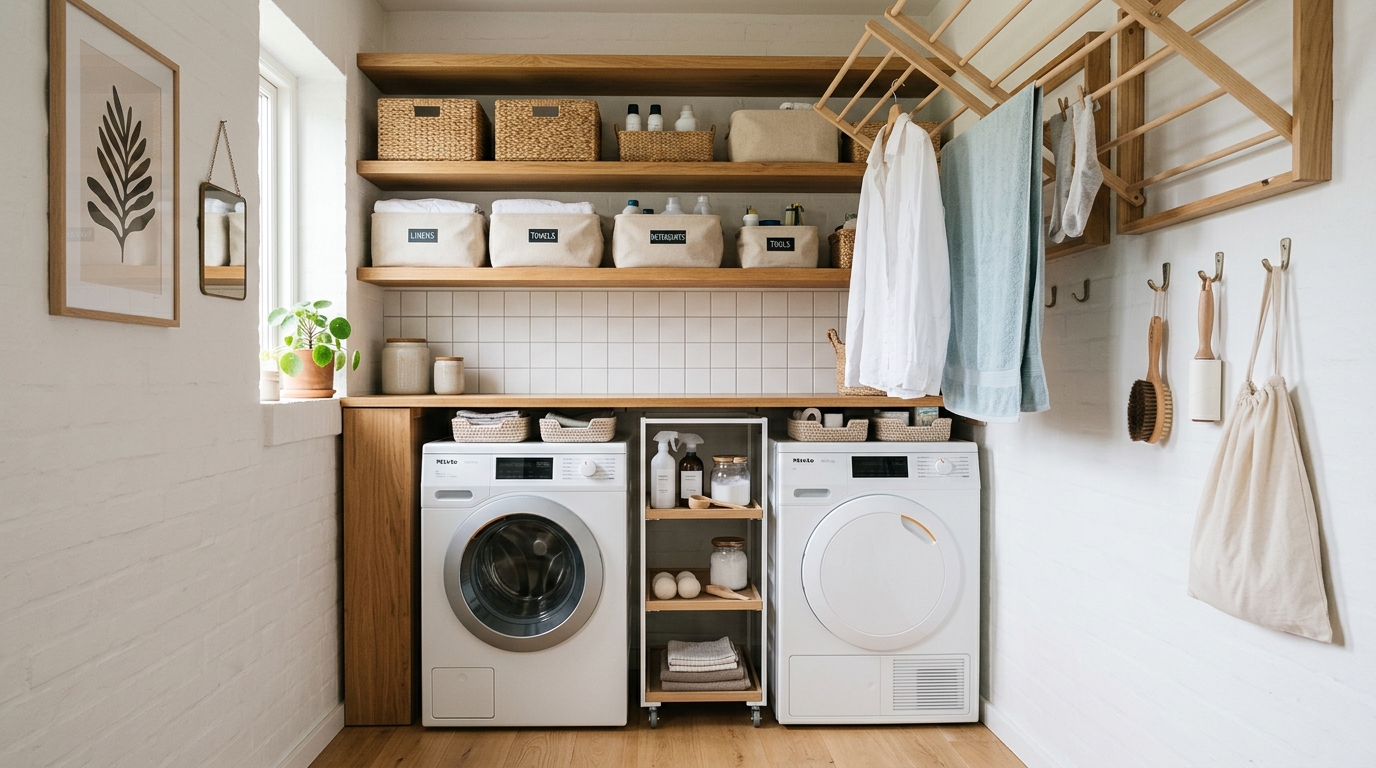
Walk into almost any small laundry room, utility closet, or apartment washer-dryer nook, and you will notice a familiar scene: flat surfaces and eye-level shelves crowded with bottles.
There is the bottle of liquid detergent currently in use, sitting shoulder-to-shoulder with a 150-ounce unopened backup jug. Right next to it sits a half-empty stain remover spray, two specialty fabric boosters, a stray box of dryer sheets, an open tub of laundry pods, and loose wool dryer balls rolling around the machine edges.
Every time you load clothes into the washing machine, you have to maneuver around heavy containers, reach past items you haven't touched in months, and push aside unopened packages just to pour out a single cap of detergent.
When a laundry space feels cluttered, our initial reaction is usually to blame the room: “We just don't have enough cabinet space,” or “We need to buy matching acrylic bins.”
In reality, the problem is rarely a lack of storage. The problem is an unclear separation between three different stages of supplies:
- What is being used right now
- What is needed later
- What needs to be replaced
When active supplies, backup stock, and forgotten containers all compete for the exact same prime working real estate, physical and visual friction are inevitable. The solution is not buying more containers—it is establishing clear boundaries through The One-Cycle Supply Rule.
Why Laundry Supplies Become Cluttered
Laundry clutter rarely happens because someone is messy or careless. In fact, it almost always starts from sensible household habits that lack a structural boundary:
- Buying Backups Before They Are Needed: Stocking up on warehouse multi-packs or grabbing extra detergent when it is on sale feels responsible, but storing those reserve items right next to the washer instantly overwhelms compact quarters.
- The Equal-Priority Trap: A 20-pound unopened box of laundry detergent receives the exact same front-row shelf placement as the single pod you need on Tuesday morning.
- Surface Creep Across the Working Area: Because washer lids, dryer tops, and small folding counters are convenient flat planes, they become default landing zones for whatever bottle was set down last.
- Multiple Active Containers in Reach: Having two different half-empty liquid detergents, three stain removers, and duplicate scent boosters open at the same time divides your attention and crowds your workspace.
This dynamic creates immediate friction. The more objects occupying your active working zone, the harder it becomes to see, grab, use, and return the items you actually need to wash your clothes. Easy-access space in a small laundry area is your most precious asset. When bulk backups and occasional products crowd that space, everyday chores become noticeably more exhausting.
To see how consistent habits protect your surfaces between wash cycles, read our guide on the 5-minute laundry room reset routine.
What Is the One-Cycle Supply Rule?
The One-Cycle Supply Rule is a simple, repeatable framework designed to keep your laundry workspace permanently functional:
ONE ACTIVE CYCLE → EASIEST REACH
BACKUPS → SECONDARY STORAGE
EMPTY → REFILL / REPLACE

The reasoning behind this rule is straightforward: the goal is not minimalism for its own sake. The goal is to keep your working zone functional.
Traditional organization asks: “Where can I pack all of the laundry products I own into this cabinet?”
The One-Cycle Supply Rule asks: “What do I actually need within arm's reach to run the next load of laundry?”
By organizing your laundry area around the immediate wash cycle rather than your total household inventory, you remove unnecessary physical obstacles. Starting a load of laundry becomes a swift, two-second action instead of a juggling routine.
For a complete look at streamlining your entire washing and drying pipeline, explore our guide on the laundry workflow rule.
What Belongs in the Active Zone?
The active zone is the easiest-to-reach spot in your laundry area—typically the front row of an eye-level shelf right above the washer, or a compact tray placed beside the machine's dispenser drawer.
This zone should contain only supplies realistically used during the current laundry cycle. For almost every household, that list is surprisingly short:
- 1 Current Detergent: The single bottle, dispenser, or small pod caddy currently in active use for regular weekly loads.
- 1 Regularly Used Stain Treatment: Your primary, everyday stain spray or pretreat stick.
- Frequently Used Dryer Accessories: A small dish or basket holding 3–4 wool dryer balls, or your current box of dryer sheets.
- 1 Mesh Delicates Bag: If you wash delicate garments or athletic wear every week.
The Fundamental Rule of Prime Storage:
If everything is treated as “active,” nothing is prioritized. Keeping only your true everyday essentials in prime reach guarantees effortless access and zero clutter.
Notice what is missing from this list: bulk jugs, secondary backup bottles, specialty fabric dyes, rust stain removers, and iron water. Those are real household needs, but they do not belong in your everyday active zone.
What Belongs in Backup Storage?
Secondary storage is any space that is slightly out of immediate arm's reach: upper cabinet shelves, the back section of deep cupboards, a slim utility cart, or a high shelf in a nearby hallway linen closet.
This is the proper home for reserve items and occasional laundry products:
- Unopened Bulk Detergent: 150-oz refill bottles, warehouse multi-packs, and spare pod tubs.
- Extra Stain Treatments: Backup bottles of everyday spray, plus specialty treatments used only on occasion (enzyme treatments, ink removers, rust removers).
- Occasional Fabric Washes: Gentle wool wash, down jacket detergent, or outdoor gear waterproofing rinses.
- Replacement Accessories & Maintenance: Spare dryer balls, extra mesh washing bags, and washing machine cleaning tablets used once a month.
Crucially, backup storage does not need to be difficult to access. It simply shouldn't occupy the prime real estate right in front of your washer. Because you only visit secondary storage once every several weeks, taking two extra steps to grab a refill causes zero friction during your daily routine.
To discover clever ways to carve out secondary storage in tight spaces, check out our guide on vertical storage and hidden spots in a small laundry room.
The Empty Stage: Refill or Replace
The final component of the framework connects active use back to secondary storage: ACTIVE → EMPTY → REFILL / REPLACE.
In many homes, empty or near-empty bottles linger on shelves for weeks. Someone uses the last two drops of detergent, sets the plastic container back down, opens a new bottle, and now two containers occupy prime space. Or worse, the last drops are used up, the bottle is tossed, and no one realizes there is no backup until laundry day arrives.
In the One-Cycle system, “EMPTY” is not a storage state—it is an operational trigger. The exact moment an active container runs dry, you execute one simple action:
- If you have a backup: Immediately retrieve the backup from secondary storage to replenish or replace the active container. Then, add the item to your shopping list so your reserve is restocked on your next errand run.
- If you do not have a backup: Immediately recycle or dispose of the empty container, and add the item to your digital shopping list before starting the machine.
This self-regulating loop prevents four chronic laundry issues:
- Forgotten Supplies: No half-empty bottles hiding behind bulk jugs, slowly expiring or drying out.
- Unnecessary Duplicate Purchases: Because you know exactly where your backup stock lives, you never accidentally buy a third container of something you already own.
- Emergency Mid-Wash Searches: You always transition from backup to active before you run completely dry.
- Shelf Overflow: Empty containers leave the active zone immediately, keeping shelf capacity at an ideal, uncrowded level.
How to Create the Active Laundry Supply Zone
You can transition your laundry area to the One-Cycle system today in less than fifteen minutes without spending a dime on new organizers. Follow this six-step implementation:
- Clear the Active Area Completely: Take everything off your primary eye-level shelf and off the tops of your washer and dryer. Place all bottles and boxes onto the floor or a nearby table so the surfaces are completely bare.
- Identify Your Core Active Essentials: Select the single detergent you reach for most often, your primary stain spray, and your dryer balls. Set these 2–3 items aside.
- Relocate Unopened Backups: Move all unopened jugs, refill cartons, and bulk packages directly into secondary storage (an upper cabinet shelf, under-counter bin, or linen closet).
- Remove Empty or Expired Products: Check bottle levels. Consolidate identical open bottles of stain spray if appropriate, recycle empty containers, and safely discard dried-up products.
- Return Only Active Supplies: Place your 2–3 core essentials back onto the primary shelf in a neat single row. Everything should be visible and grab-able with one hand.
- Leave Generous Buffer Space: Ensure at least 30% of the shelf remains completely open. This buffer space prevents items from knocking into each other and keeps surfaces calm.
If you have dedicated folding counter space above your appliances, keeping it free of supplies is essential. For layout tips, see our guide on how to organize a laundry folding area in a small space.
A Simple Laundry Supply Reset
Even with a great system, busyness happens. After a frantic weekend of family laundry or a major shopping trip, supplies can start creeping back toward the machines. Use this quick reset checklist once a week or whenever the space starts feeling crowded:
The 4-Point Laundry Supply Reset
- □ KEEP ACTIVE: Verify that only 1 detergent, 1 stain remover, and dryer accessories sit in your easiest-reach zone.
- □ MOVE BACKUPS: Return any newly bought warehouse multi-packs, duplicate bottles, or specialty washes back to secondary storage.
- □ REMOVE EMPTY: Dispose of or recycle finished containers, and note any backups that need replenishment on your shopping list.
- □ CLEAR THE WORKING ZONE: Wipe down machine tops and folding counters so they remain clear, flat planes ready for the next load.
When You Actually Need More Storage
At SpaceSavvyLiving, we always recommend establishing your operational system before buying organizing products. In many cases, separating active supplies from backups frees up enough prime shelf space that no new furniture or hardware is required.
However, you may genuinely need additional storage if you meet all four of these criteria:
- You have already separated active supplies from secondary backups.
- All empty, expired, or unnecessary laundry items have been removed.
- Your machine tops and working zones are protected from daily bottle clutter.
- Your 2–3 active supplies or essential backup jugs still lack a practical, stable home.
If that describes your setup, here are three renter-friendly, non-invasive storage solutions that add utility without creating visual chaos:
- A Slim Gap Utility Cart: If you have a narrow 6-to-8-inch gap between your washer and dryer (or between the dryer and the wall), a slim rolling cart creates excellent secondary storage for heavy bulk jugs without taking up shelf room.
- A Magnetic Washer-Side Basket: In compact laundry closets where drilling shelves into drywall is forbidden by lease agreements, heavy-duty magnetic shelves attach directly to the side of a metal washing machine. This holds your active detergent and stain spray at perfect arm's reach.
- A Non-Damaging Over-Washer Tension Shelf: If your laundry closet lacks any shelving above the machines, a tension-mounted or freestanding over-washer rack creates an instant two-tier hierarchy for active supplies below and backups above.
Common Mistakes to Avoid
As you implement and maintain this framework, watch out for these five frequent organizational traps:
- Keeping Every Backup in Prime Reach: Storing warehouse jugs right where you wash clothes wastes the easiest-reach zone on items you won't need to open for two months.
- Storing Too Many Active Products Together: Having three different scents of regular liquid detergent open at once clutters your shelf and creates unnecessary decision fatigue for every load.
- Filling Shelves to 100% Maximum Capacity: An overcrowded shelf forces you to squeeze bottles in sideways. A functional shelf should always have at least 25–30% breathing room so items slide in and out effortlessly.
- Buying Containers Before Deciding What Belongs There: Purchasing decorative bins before determining your active versus backup inventory often leaves you with organizers that don't fit your actual product dimensions.
- Confusing Storage Capacity with Usable Workspace: Just because a flat dryer top can physically hold eight bottles does not mean it should. Flat surfaces in a laundry room exist to sort, fold, and inspect clothing—not to store products.
Quick Reference Summary
Use this quick reference guide to determine where any laundry item in your home belongs:
Whenever your laundry room begins to feel cluttered again, step back and remember the golden rule: You are not organizing around everything you own. You are organizing access around what you currently use.
For more space-saving strategies, visit our comprehensive hub of laundry room organization ideas.
Frequently Asked Questions
If you genuinely alternate between liquid detergent and pods for different weekly loads, both can qualify as active supplies. The key is to keep only one active container of each in prime reach, and store bulk refill cartons or spare boxes in secondary storage.
In laundry closets without upper cabinetry, utilize floor-level secondary spots such as the narrow gap beside your appliances, a slim slide-out utility cart, or the bottom shelf of an adjacent hallway linen closet.
Decanting is completely optional, but in compact laundry spaces, transferring detergent from a heavy 150-oz bulk jug into a lightweight 32-oz pump dispenser reduces physical strain, prevents drips on machine tops, and frees up crucial shelf space.
In closet setups with only a single wire shelf above stacked machines, reserve the very front center of that shelf for your single active detergent bottle and stain spray. Store backup supplies at the extreme ends or high on a closet shelf where you only need to reach once every few months.
Items like washing machine tub cleaners, wool wash, or fabric dye belong firmly in secondary storage. Bring them to the machine only on the specific day you run that cycle, and immediately return them to secondary storage once finished.