The laundry is washed. The cycle finishes. The clothes are clean, warm, and dry. And then—the entire process abruptly grinds to a halt.
A laundry basket filled with clean clothes gets pulled from the dryer and placed on top of the machine. An hour later, it migrates to the bedroom armchair. By evening, it is moved to the bed, only to be transferred back to the floor before you go to sleep. Two days later, you find yourself digging through the basket to find socks, wondering how clean clothes managed to create so much household clutter.
The problem is rarely that you dislike folding or that your apartment lacks square footage. The true culprit is that there is no defined transition point between the dryer and your closet.
The core insight behind a functional laundry folding area in compact homes is simple: clean laundry needs a designated destination between the dryer and the closet. When you create an intentional, low-friction pathway using the Dry → Fold → Park → Put Away system, clean clothes stop getting trapped in limbo and flow smoothly back into your wardrobe.
Why Clean Laundry Becomes the Bottleneck
In almost every home, washing and drying are automated tasks. The machines do the heavy lifting while you focus on other things. But the moment the dryer buzzer sounds, the process shifts from passive automation to active physical labor.
Without an established folding station, several friction points emerge simultaneously:
- No Immediate Flat Surface: If there is nowhere to lay out a shirt or pants immediately, the clothes stay in the basket, where they quickly wrinkle.
- Fragmented Folding Locations: Folding happens randomly on the dining table, the sofa, or the bed, spreading laundry clutter across your living areas.
- Temporary Piles Become Permanent: Unsorted piles sit out for days because putting them away feels like a separate, overwhelming task.
- No Transition Mechanism: When you are interrupted mid-fold, the unfinished load has nowhere to go except back into a messy pile.
Your laundry room can be completely tidy while your laundry workflow remains broken. Fixing the bottleneck requires designing a predictable transition for finished garments.
Start With What Happens After the Dryer
To diagnose your laundry bottleneck, ask yourself one simple question: "Where do clean clothes go the very second they come out of the dryer drum?"
For most apartment renters, the answer is:
- Left sitting inside the dryer drum for multiple cycles
- Dumped into a generic laundry basket
- Piled onto an accent chair or couch
- Stacked on the bed or corner of the dresser
Your answer reveals the exact breakdown in your workflow. If clothes have no immediate place to land, they will claim whichever flat surface is closest. Identifying this landing zone allows you to replace accidental clutter with an intentional folding point.
The Dry → Fold → Park → Put Away System
To prevent clean clothes from piling up, establish this continuous 4-step framework:
DRY → FOLD → PARK → PUT AWAY
- DRY: Empty the dryer drum immediately while fabrics are warm and wrinkle-free.
- FOLD: Transfer the load directly to your designated folding point and fold items in a single, focused session.
- PARK: If you cannot put every item into closets immediately, place the sorted stacks in ONE temporary clean-laundry parking spot.
- PUT AWAY: Transport the categorized stacks directly to their final drawers and hangers.
The temporary parking spot acts as a buffer zone. It prevents clean laundry from taking over living room furniture while you complete your daily routine.
What Makes a Good Laundry Folding Area?
A laundry folding station does not require a massive quartz countertop or a custom utility room. A highly functional folding point only needs to meet a few practical criteria:
- Comfortable Standing Height: Working at waist-to-hip height prevents back strain during multi-load days.
- Unobstructed Flat Surface: A clear area large enough to lay out a bath towel or pair of jeans flat.
- Easy Surface Clearance: The surface must be simple to wipe down and clear of unrelated clutter before starting.
- Proximity to Baskets or Hangers: Having your sorting bins or closet hangers within arm's reach speeds up the folding process dramatically.
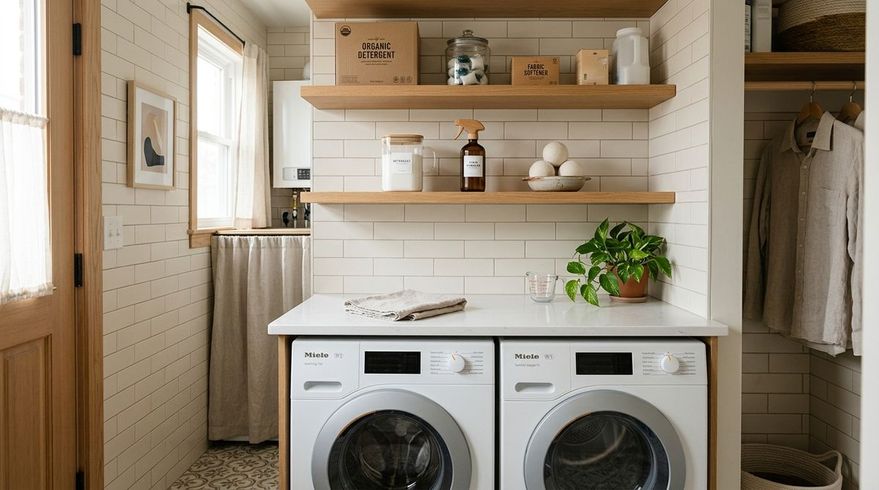
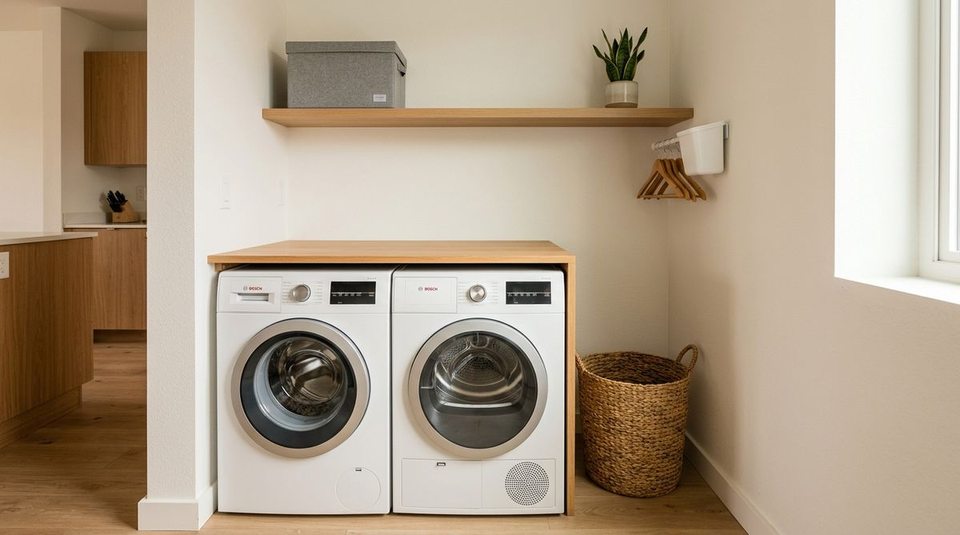
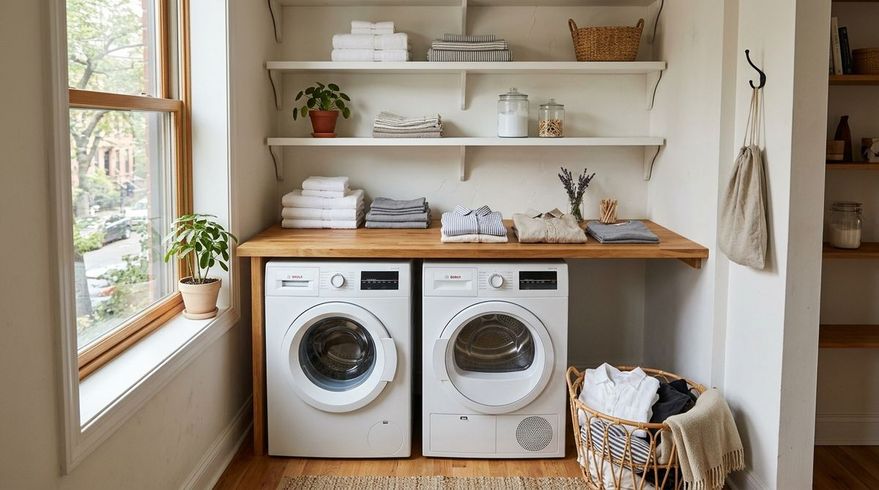
Existing surfaces like a wooden counter above front-loading machines, a clean dining table, or a sturdy drop-leaf table can all serve as excellent folding points.
How to Create a Folding Area When You Have Almost No Space
If your washer and dryer are tucked inside a tiny hallway closet or bathroom nook, you might not have room for a dedicated laundry counter. In tight quarters, apply these small-space strategies:
- The "Counter Over Machine" Technique: If you have front-loading machines, placing a removable butcher block or magnetic surface directly over the washer and dryer instantly creates a premium folding counter.
- The Dual-Purpose Furniture Approach: Use a nearby dining table or kitchen island as your official folding zone, committing to folding immediately before clearing the table.
- Wall-Mounted Drop-Leaf Shelves: A shallow wall shelf that folds flat against the wall when not in use provides an on-demand surface without eating up floor space.
The folding area does not need to be dedicated solely to laundry 24/7. It simply needs to be reliably available when a load finishes.
Create One Temporary Clean-Laundry Parking Spot
Life happens. Sometimes a phone call, a crying child, or dinner prep interrupts you halfway through folding. This is where most systems fail: clothes get left in a heap on the couch.
A temporary clean-laundry parking spot solves this by establishing a strict, contained holding zone:
- Strictly One Location: Designate a single shelf, rolling cart tray, or dedicated basket as the parking zone.
- Clean Clothes Only: Never mix dirty hampers with the clean parking spot.
- Temporary by Definition: The parking spot is a transition point, not permanent storage. It must be emptied before the next laundry load begins.
- Zero Floor Footprint: Keep the parking zone off the floor to prevent clothes from getting stepped on or collecting dust.
"A parking spot is a transition, not a destination."
Keep the Folding Area Close to the Next Step
Workflow friction increases with distance. The further you have to walk between pulling clothes from the dryer, folding them, and hanging them up, the more likely you are to abandon the task halfway through.
If your laundry machines are in a dark basement or hallway closet far from your bedroom, it may be significantly faster to carry the warm basket directly into the bedroom and fold beside the open wardrobe. To understand how sequential movement impacts efficiency, our guide to the laundry workflow rule that makes laundry feel easier breaks down the ideal physical sequence.
Organize Clothes by Destination While Folding
One of the most effective habits you can build at your folding station is sorting by destination during the fold rather than sorting by garment type.
As you fold each piece, immediately place it into a designated stack based on where it lives:
- Stack 1 (Primary Closet): Shirts, trousers, and hanging items.
- Stack 2 (Dresser Drawers): Undergarments, socks, and workout gear.
- Stack 3 (Linen Cabinet / Bathroom): Bath towels and washcloths.
- Stack 4 (Kids / Partner): Items belonging to other household members.
When folding is complete, you simply pick up each stack and deliver it to its room in a single, 30-second trip.
Don't Let the Laundry Basket Become the Folding System
A laundry basket is a transportation tool—it is not an organization system. When clean laundry lives in a basket for days, it creates two major problems:
- Clothes develop stubborn creases, requiring re-steaming or re-ironing.
- The basket is unavailable for dirty clothes, causing dirty garments to accumulate on the bathroom floor.
Train yourself to treat the basket like an elevator: it moves items from the dryer to the folding station, and once unloaded, it immediately returns to its home.
Renter-Friendly Laundry Folding Solutions
Renters cannot build custom cabinetry or mount heavy permanent islands in their laundry closets. Fortunately, several non-permanent, damage-free tools create exceptional folding stations:
- Magnetic Machine Trays & Shelves: Heavy-duty magnetic shelves attach directly to the metal sides or tops of washing machines, adding a stable, walled drop zone for folded towels or detergent without screws.
- Slim Freestanding Utility Carts: A narrow multi-tier cart parked between machines provides portable sorting shelves and temporary parking trays.
- Freestanding Garment Racks: A compact rolling clothing rack with a bottom shelf creates a complete hanging and folding station in any bedroom or hallway corner.
For small-space setups where the washer and dryer top is your only available surface, an ultra-strong magnetic machine shelf transforms the slick, vibrating metal lid into a secure work zone.
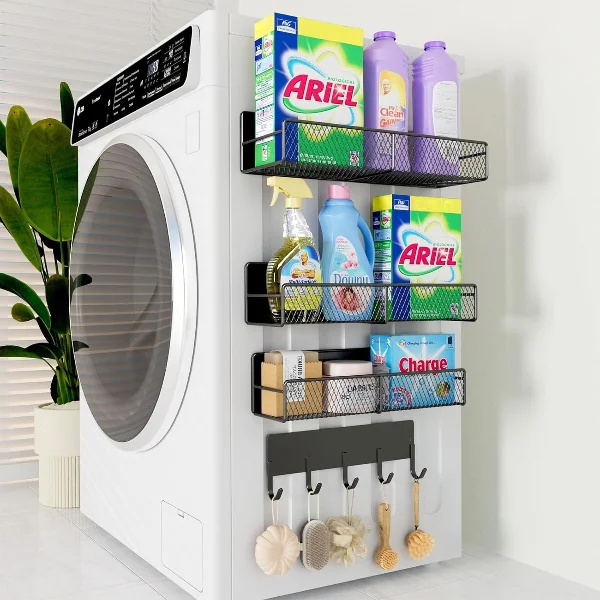
Magnetic Washer & Dryer Shelf
Solution: Equipped with ultra-strong backing magnets, this sturdy metal shelf attaches securely to the top or side of your washer/dryer, creating an instant, stable drop zone with a raised perimeter lip.
- Ultra-strong magnets stay securely locked in place during heavy spin cycles
- Raised protective lip prevents folded clothes and supplies from falling behind machines
- Zero drilling or installation required—100% renter-friendly
For more renter-friendly strategies that reclaim wasted vertical space in tight utility closets, see our complete guide to vertical storage in a small laundry room. When auditing your laundry area, our review of 7 things wasting space in your laundry room helps clear out unnecessary clutter.
Test Your Folding Area Before Buying Anything
Before purchasing new furniture or organizers, test your folding workflow with a zero-cost 2-load trial:
- Select One Flat Surface: Choose your bed, kitchen island, or washer top as your designated folding point.
- Designate One Parking Spot: Pick a single chair or basket for temporary holds.
- Run a Load of Laundry: As soon as the dryer buzzes, move clothes directly to the folding point.
- Sort by Destination: Fold into separate destination stacks.
- Observe the Friction: Did you have enough elbow room? Was the height comfortable? Did putting clothes away feel fast?
If the workflow felt smooth, you have successfully solved the problem without spending a single dollar.
The 60-Second Clean-Laundry Bottleneck Test
To eliminate laundry paralysis today, run through this quick 60-second audit:
✓ Spot the landing zone: Where are clean clothes currently sitting in your home?
✓ Clear your folding point: Clear 3 feet of flat surface space near your dryer or wardrobe.
✓ Set up one parking spot: Assign a single basket for mid-task pauses.
✓ Fold one complete load: Fold items into destination stacks immediately.
✓ Put away and reset: Carry the stacks to their drawers and return the empty basket to its home.
For additional tool recommendations that streamline tight utility spaces, explore our roundup of 7 tiny laundry room storage products that instantly create more space.
When You Actually Need More Laundry Furniture
Good organization begins with routines, not shopping. However, adding a dedicated piece of laundry furniture is justified when:
- You have literally zero clean flat surfaces in your home during normal hours.
- Your laundry volume is high (e.g., a family of four or more) and multiple loads overlap daily.
- A dual-purpose table can serve as both a folding counter and an ironing/craft station.
- The furniture actively removes physical friction without crowding your hallway walkways.
How to Keep the Folding Area Working
To ensure your folding system remains functional long-term, maintain these simple habits:
- Clear the Counter Immediately: Never use your folding surface as a permanent drop zone for detergent jugs, lint rollers, or loose change.
- Empty the Parking Spot Before the Next Load: Ensure temporary stacks are put away before a new wash cycle starts.
- One Load at a Time: Avoid washing three loads in a row if you only have time to fold one; keep the pipeline moving in manageable batches.
"The best system is the one you can repeat."
The Goal Isn't a Bigger Laundry Room
You do not need a sprawling suburban laundry suite with a marble island to stay on top of your clothes. What you truly need is a clear, repeatable path for clean laundry to travel from the heat of the dryer to the hanger in your closet.
By establishing one reliable folding point and following the Dry → Fold → Park → Put Away routine, you eliminate the clean-clothes bottleneck once and for all—keeping your small apartment calm, clutter-free, and effortlessly organized.